
slide-001.jpg
slide-002.jpg
We strive to provide our patients the highest quality foot and ankle care. From comprehensive diagnostics to a wide range of podiatric services from routine to advanced, our goal is to pinpoint the underlying cause of your condition and treat it successfully.
For more than 20 years, Dr. Tran and the team at AllCare Foot & Ankle Center have been helping patients return to the activities that matter most. With locations in Arlington and Dallas, TX the practice is built around the simple idea that when your feet feel better, your whole life feels more manageable.
Foot and ankle pain can make even everyday movement feel like a challenge. At AllCare, care begins with listening. Each patient is evaluated thoroughly so the root of the problem is clearly understood, not just the symptoms. Dr. Tran brings decades of experience and advanced training to every visit, allowing for thoughtful, individualized treatment that supports long-term mobility and comfort.
The team takes a hands-on, comprehensive approach, recognizing that foot pain can sometimes be connected to issues in the legs, hips, or back. From ingrown toenails and sports injuries to diabetic foot care and wound management, every concern is treated with attention and respect.
AllCare Foot & Ankle Center welcomes patients seeking experienced, attentive care. Call or schedule online to get started.

Podiatrists often see patients who have experienced a foot or ankle injury while playing sports. Popular sports such as running, soccer, football, basketball, tennis, and dance can be particularly hard on the feet and ankles. Strain on the muscles, tendons, ligaments, and bones of the lower limbs from overtraining and repetitive motions can lead to overuse injuries. Acute trauma to the feet or ankles while playing sports or training are also common. Some of the sports injuries that podiatrists frequently diagnose and treat include plantar fasciitis, turf toe, sesamoiditis, stress fractures, ankle sprains, and Achilles tendonitis.
If you are an athlete, you may be tempted to ignore the symptoms of a foot or ankle injury in favor of continuing to train and participate in your sport. This is ill-advised, as the pain or discomfort you are experiencing is the first sign that something is wrong and needs to be checked out by a professional. Left untreated, even seemingly mild injuries, such as a grade one ankle sprain, can progressively worsen, become chronic conditions, and increase the likelihood of reinjury. Common symptoms of a foot or ankle injury that should never be ignored include pain, swelling, and bruising.
If you are involved in sports and experience any foot or ankle pain, please seek the care of a podiatrist. A podiatrist can determine the nature and extent of your injury, offer treatment options, and advise you on how to prevent sports-related foot and ankle injuries in the future.

Plantar fasciitis is a condition in which the plantar fascia, the ligament that runs along the bottom of the foot and connects the toes to the heel bone, becomes inflamed. This most often occurs due to overuse, or repetitively doing activities that put excessive strain on the plantar fascia. Unsurprisingly, plantar fasciitis is a common injury among runners and other athletes. Other possible causes for plantar fasciitis include wearing unsupportive shoes and standing for prolonged periods of time. People who are obese, have flat feet, abnormally high arches, or are pregnant may be at an increased risk of developing this condition.
The telltale symptom of plantar fasciitis is an acute, sharp, stabbing pain in the heel. This pain may radiate to the arch of the foot, and you may also notice swelling near the heel. The pain is usually at its worst when you take your first few steps after a long period of rest, such as when you get out of bed in the morning. As you walk, the pain may subside, but can reemerge after spending a long period of time on your feet. Without treatment, the pain may gradually increase over a period of several months and become chronic.
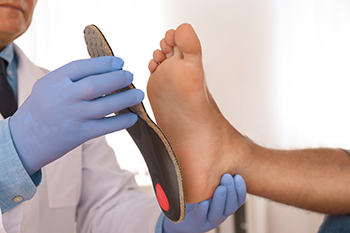
Treatment for plantar fasciitis is usually conservative and begins with resting and icing the affected foot, stretching, taking anti-inflammatory medications, and wearing comfortable and supportive shoes. If the pain persists, your doctor may suggest padding, taping, or strapping the affected foot, wearing orthotics, a night splint, or a cast, corticosteroid injections into the foot, and physical therapy. If these treatment methods do not produce results, surgery can be considered.
If you are experiencing the symptoms of plantar fasciitis, please seek the care of a podiatrist.
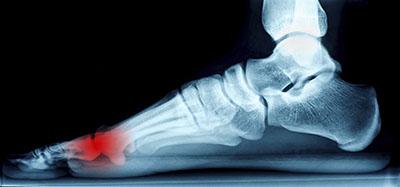
If you find yourself feeling as though you are walking on a pebble in your shoe, only to check and find no pebble there, then you may have Morton’s neuroma. Morton’s neuroma is a foot condition in which the nerve tissue between the toes thickens, causing symptoms such as pain, tingling, burning, numbness, and the feeling of something being stuck in the ball of the foot. The symptoms may come on gradually, go away temporarily, and then return, progressively worsening over time.
The nerve tissue thickening associated with Morton’s neuroma is caused by compression or irritation of the nerve. This can occur due to wearing shoes that are too too tight or narrow in the toe area, wearing high heels which put excess pressure on the balls of the feet and toes, running, or playing court sports like tennis. Having certain foot conditions, such as bunions, hammertoes, or flat feet, can predispose you to developing Morton’s neuroma.
A podiatrist can diagnose Morton’s neuroma by taking a medical history and completing a physical examination. Sometimes imaging studies are used to confirm the diagnosis. Treatment is typically conservative and may include padding the foot, wearing orthotics, modifying footwear and activities, resting and icing the affected foot, taking anti-inflammatory medications, or injecting medicine directly into the foot. In severe or chronic cases, surgery may be recommended.
If you are experiencing the symptoms of Morton’s neuroma, please seek the care of a podiatrist.

Ingrown toenails occur when the edge of a nail grows into the surrounding skin, rather than over it. This can cause symptoms such as redness, swelling, pain, and tenderness of the surrounding area. In more severe cases, the area can become infected and lead to bleeding, oozing of pus, and fever, among other symptoms.
Most ingrown toenails are caused by improper trimming of the nails. Trimming your nails into a rounded shape or cutting them too short can lead to ingrown toenails. When trimming the toenails, it is suggested that you use nail clippers to trim the nails straight across. The nails’ length should be roughly even with the tips of your toes. Wearing shoes that are too tight and narrow in the toes can also lead to ingrown nails, as the tight shoes compress your toes and can cause the nails to dig into the skin. To avoid this, opt for shoes with a wide toe box.
Ingrown toenails are typically not serious and can be managed with home treatment. However, they can be dangerous for individuals who have underlying conditions such as diabetes, which can make foot wounds and infections more likely. Some people are also prone to ingrown toenails, and may require medical treatment. If you have painful or recurrent ingrown toenails, an infected nail, or an underlying condition that can impact your foot health, please seek the care of a podiatrist.
3030 Matlock Rd, 102, Arlington, TX 76015
Mon:8:30am - 5:00 pm
Tue:8:30am - 5:00 pm
Wed:8:30am - 5:00 pm
Thu:8:30am - 5:00 pm
Fri:8:30am - 4:30 pm
17110 Dallas Pkwy, Suite 180, Dallas, TX 75248
Mon:8:30am - 5:00 pm
Tue:8:30am - 5:00 pm
Wed:8:30am - 5:00 pm
Thu:8:30am - 5:00 pm
Fri:8:30am - 4:30 pm